
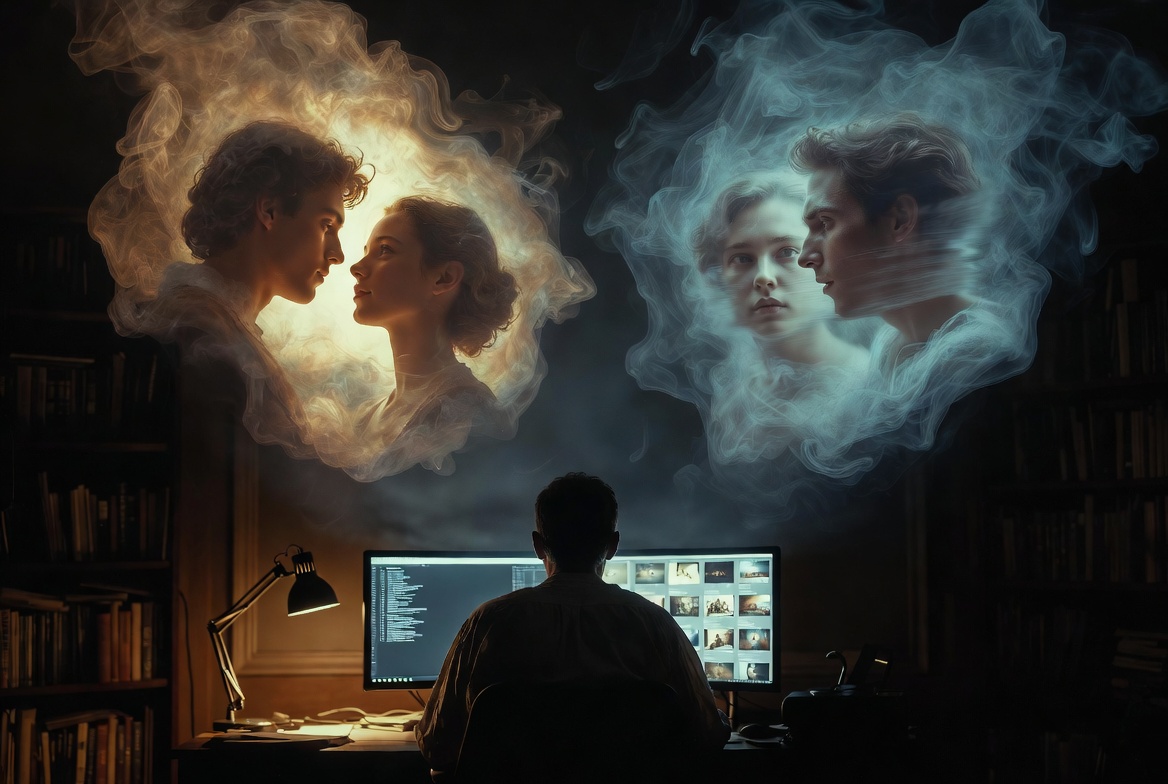
Photographs have long shaped how we remember. An image catches us off guard and suddenly we are no longer in the present. The body reacts before the mind can intervene. A tightening in the chest. A warmth. A hollow drop. For most of history, the direction was clear: photographs created memories.
Today, that direction is reversing. Generative AI systems now allow us to create images not from cameras, but from recollection. Using structured, detailed prompts, we can reconstruct scenes from our past with striking realism. These images never existed in the physical world, yet they can feel disturbingly faithful to experience.
Much public conversation around AI image generation focuses on avatars and deepfakes. Image-to-image systems transform existing photographs into fantasy scenarios. Users become superheroes, historical figures, or cinematic protagonists. These tools project identity forward into imagination.
Text-to-image memory reconstruction is different. Here, there is no source photograph. The image begins with narrative — with description. A person writes a scene in detail: the room, the lighting, the posture, the expression. Modern systems are increasingly capable of interpreting long, structured prompts with precision. The result can resemble a photograph taken decades ago, even though no such photograph ever existed.
This shift carries psychological weight. When a memory remains internal, it is fluid. It can evolve, soften, distort, or blur. When that same memory is rendered as an image, it acquires visual authority. It begins to feel fixed — like evidence.
I experimented with this process myself. Through iterative refinement of prompts, I reconstructed emotionally significant moments from my past. Some of the images were glorious and generated the feelings of hope and discovery rivaling the original events. Some images felt accurate in ways that were almost unsettling and emotionally accurate. Even though no photograph was in reality taken at these moments in time, it seemed as if there had been.
I found myself destroying many of them because they felt too intimate. Once externalized, they crossed an internal boundary. The process of writing the prompt itself forces interpretation. What detail matters? Where does the “camera” stand? What is clear and what is obscured? In composing a prompt, one is not merely recalling — one is selecting and emphasizing. The image that results may amplify that emphasis.
There is also temptation. If a memory is painful, one may wish to revise it. To soften it. To correct it. To visualize the apology that never came, the love that was never expressed, the moment that ended differently. In these cases, the generated image becomes not reconstruction but re-authoring. And because these images can look convincingly real, they may reinforce interpretations that were once uncertain.
Unlike image-to-image deepfakes, which raise obvious legal concerns, text-to-image memory reconstruction exists in a subtler space. It may produce likenesses of real individuals without using source photographs. The ethical questions are less clear but no less significant.
As generative systems become more powerful and more private — capable of running on personal machines rather than public platforms the responsibility for restraint increasingly shifts to the user.
Nature did not equip us to read one another’s thoughts. Now we possess tools that can visualize our own with remarkable fidelity. This is not merely a technical development. It is a psychological frontier.
Photos once created memories. Now memories create photos. And how we choose to use that capability — with caution, humility, and respect for boundaries — may matter more than the images themselves.
Author’s Note
This essay arises from personal experimentation using AI text-to-image generation tools with installed AI image and video generative software on a personal server and GROK Imagine image generation. The key element is using a structured complex text prompt. I do not offer this as psychological guidance, technical instruction, or ethical decree, but as an invitation to thoughtful restraint.
As generative technologies move rapidly from novelty to intimacy, we will need not only better tools, but better instincts. Some images may be worth creating. Some may be worth confronting. And some—perhaps the most powerful of all—are best left unseen by anyone but the person who summoned them.
Further Reading
Readers interested in the emerging use of generative AI for memory reconstruction and therapeutic experimentation may wish to explore:
- Discussions surrounding the concept of “synthetic memories” in AI image generation
- The evolving role of the “promptographer” — individuals who interview subjects to translate memories into structured prompts
- Projects exploring AI-assisted memory visualization for dementia therapy
- Public conversations around reconstructing childhood memories using text-to-image systems
- Online demonstrations and tutorials, including YouTube explorations of AI-assisted memory reconstruction
As this field continues to evolve, so too will the ethical, psychological, and legal questions surrounding it.
© 2026 SereyJones Publishers, Inc. All Rights Reserved
0 Comments